A bracelet that looks great in a photo can still pinch, slide around or wear out sooner than you hoped. This guide explains how to choose a men's bracelet you'll actually keep wearing. It starts with measuring your wrist, then compares the main materials, shows how to assess construction, matches bracelets to their job, untangles quality versus luxury language and finishes with a quick buying checklist.
Quick answer: To choose a men’s bracelet, measure your wrist where it will sit, add about 1–1.5cm for a close fit or 1.5–2cm for a relaxed fit, then pick a material for how you live: stainless steel for low maintenance, sterling silver for lasting value, leather for a casual look, or natural stone beads for colour and texture.
A well-chosen bracelet should feel comfortable, suit the way you dress and withstand the way you actually live. Price and decoration do not tell the whole quality story. Start with fit, then compare materials, construction and maintenance before deciding whether a piece belongs in an everyday rotation or is better reserved for occasions.
Start with wrist measurement
Wrap a flexible tape around the wrist where the bracelet will sit. For a close fit, add around 1–1.5 cm; for a relaxed fit, add 1.5–2 cm. Treat those additions as a starting point because bead size, cuff shape and multi-strand construction change the internal fit.
Check whether a product is measured end to end or by internal circumference. A bracelet that is too loose will rotate and catch; one that is too tight can strain the clasp or cord.
Compare the main materials
Natural stone beads
Stone bracelets introduce texture and colour. Inspect drill holes, surface finishing, elastic or cord and spacer alignment. Browse beaded bracelets for matte, polished and macramé constructions.
Leather
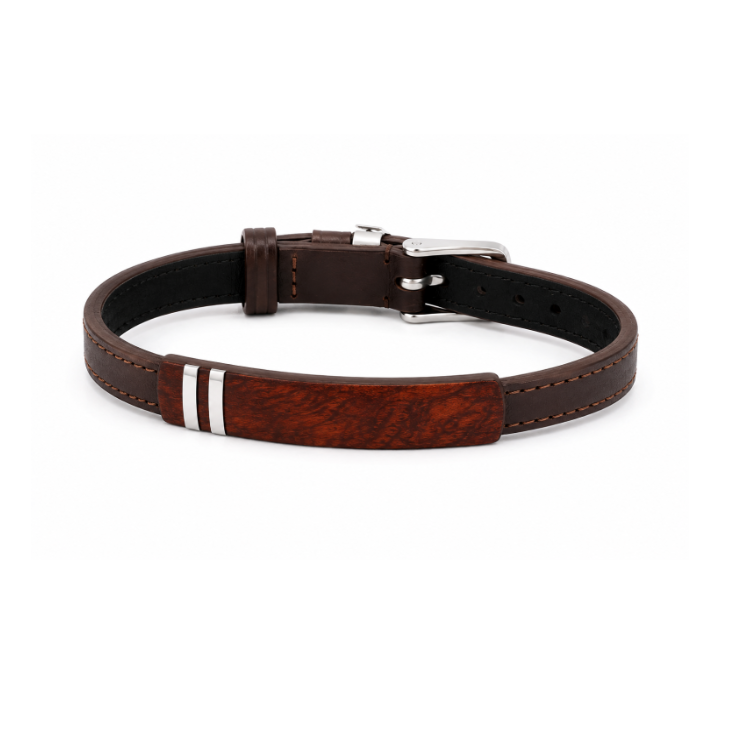
Leather is flexible and casual. Check braiding, edge finish and the junction between leather and clasp. Keep it away from prolonged water exposure.
Sterling silver
Silver cuffs and links offer lasting material value but require occasional tarnish care. Look for 925 marking where applicable and a secure, serviceable clasp.
Stainless steel
Steel is durable, corrosion resistant and relatively low maintenance. Brushed finishes hide small marks better than mirror polish.
Assess construction
- Open and close the clasp several times; it should engage cleanly without excessive play.
- Check that jump rings are closed and link edges are smooth.
- Look for even tension in strung or knotted bead bracelets.
- Inspect where leather enters metal fittings for glue overflow or gaps.
- Confirm that plated finishes have clear care instructions.
Match the bracelet to its job
For daily wear, prioritise comfort, low-profile construction and manageable care. For work or formal settings, slimmer designs and controlled finishes integrate more easily with tailoring. For gifts, choose adjustable sizing or confirm the recipient’s wrist measurement before ordering.
If you plan to wear the bracelet beside a watch, select smooth materials and allow space between hard metal surfaces.
Quality versus luxury language
Words such as premium and luxury are not technical standards. A useful product page should state material, dimensions, closure, finish and care. Those details let you compare pieces on substance rather than marketing language. Consider whether the seller provides clear photographs, contact information and practical support if sizing or repairs are needed.
A quick buying checklist
- Correct internal fit for the wrist and bead size
- Clearly identified materials and finishes
- Secure clasp, cord, elastic or knotting
- Smooth skin-contact surfaces
- Care requirements that suit your routine
- A style that works with jewellery you already wear
Explore the collection
Compare more than 300 current styles in the men’s bracelet collection, including beaded, leather and sterling silver designs.
A five-minute check before ordering
Open the live product page and confirm wrist measurement, wearable length, width, material, clasp, weight, return conditions and any natural variation. Product names and photographs can communicate style, but specifications reveal whether the piece will work in daily life. Compare the measurements with an item you already own, read the full material description and keep a record of the details that matter to your decision.
Finally, imagine wearing the item for a complete day: sitting, moving, working and changing layers. If the fit, weight or care routine is unclear, ask before purchasing. This short check is especially useful for gifts and occasion purchases, when a deadline can make an avoidable mistake harder to correct.
Shop the look: for daily wear, try the low-profile Stainless Steel 3mm Braided Cable Cord Bracelet or the Polished Black Onyx Beaded Bracelet.
Frequently asked questions
How much should I add to my wrist measurement?
Around 1–1.5cm for a close fit and 1.5–2cm for a relaxed fit. Bead size, cuff shape and multi-strand designs change the fit, so check each listing.
Which bracelet material needs the least care?
Stainless steel. It is durable, corrosion resistant and relatively low maintenance, and brushed finishes hide small marks.
How can I tell if a bracelet is well made?
Open and close the clasp several times; it should engage cleanly. Check that jump rings are closed, link edges are smooth and beads are evenly finished.
More in this topic
- Natural Stone Bracelets for Men: Materials, Style and Care
- Beaded Bracelet Stone Meanings: Black Onyx, Dragon Blood, Tiger Eye and More
- Men's Leather Bracelets: Fit, Styling and Care
- Macramé and Adjustable Bracelets: Fit, Materials and Care
- Men's Sterling Silver Bracelets: Buying and Care Guide
- How to Wear Bracelets with a Watch