Leather descriptions can be hard to decode, and a good-looking photo doesn't tell you how a wallet or bracelet will hold up. Below, we break down how to judge men's leather goods on function and construction. You'll learn to read the description, choose wallet capacity honestly, inspect the build, fit a leather bracelet, understand patina, care conservatively and match accessories to your wardrobe.
Quick answer: Judge men’s leather goods on function and construction rather than labels: choose wallet capacity honestly, look for even stitching, reinforced stress points, sealed edges and smooth hardware, and expect uncoated leather to develop a patina with use.
Good leather goods become useful through proportion, construction and the way they suit daily habits. A wallet that is too large stays at home; a bracelet that is too tight is never worn. Begin with function, then compare the leather, edges, lining, hardware and care requirements stated for the individual piece.
Understand the description
Leather labels can refer to different animal sources, surface treatments and constructions. Full-grain, top-grain, corrected and split leathers behave differently, but a label alone does not guarantee workmanship. Look for a complete description, clear photographs and information about lining, coating, stitching and hardware.
Choose wallet capacity honestly
Count the cards and notes you carry now. A slim card holder is ideal only if you are prepared to edit; overfilling stretches pockets and seams. A bi-fold provides more separation but adds bulk. Check closed dimensions, card slots, note capacity and whether the product is intended for the currency or items you use.
Inspect construction
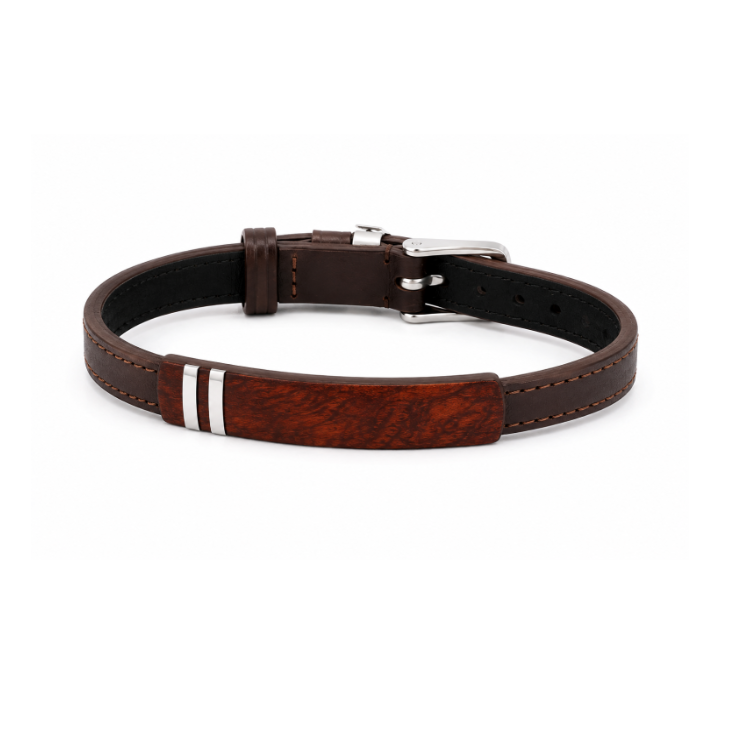
Even stitching, secure bar tacks at stress points, sealed or burnished edges and a lining that sits flat are positive signs. Hardware should move smoothly without sharp edges. On braided bracelets, look at the clasp connection and where leather enters the fitting. Product photos should show more than the front face.
Fit a leather bracelet
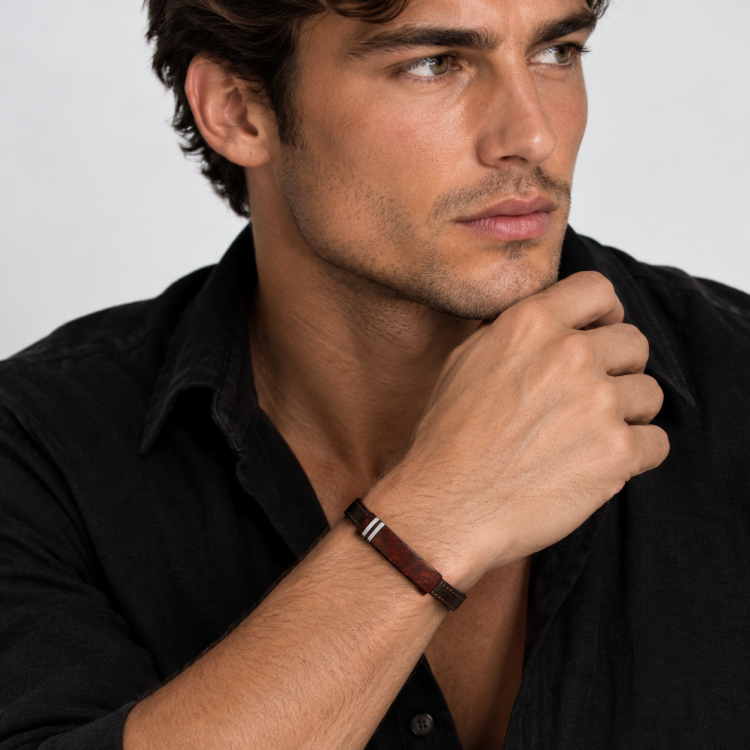
Measure the wrist snugly, then compare with the listed wearable length and fit guidance. Multi-strand and broad styles can feel tighter than a single cord. A magnetic or box clasp should close securely and sit comfortably away from the wrist bone. Do not stretch leather to force a fit.
Use and patina
Uncoated leather can darken, soften and mark with use; heavily finished leather changes more slowly. Patina can be attractive, but water stains, chemical damage and deep abrasion are not the same thing. Rotate frequently used pieces and keep them away from denim dye transfer or rough contents.
Care conservatively
Wipe with a soft dry cloth and let incidental moisture dry naturally away from heat. Do not soak leather or apply household oils. If conditioning is recommended, test a product intended for that leather on a hidden area because it may darken the surface. Store wallets unstuffed and bracelets unclasped in their natural curve.
Match the accessory to the wardrobe
Black leather is clean and adaptable; dark brown works well with navy, olive and earth tones; coloured leather is strongest when repeated elsewhere. You do not need a perfect belt-shoe-wallet match. Keep the level of polish and hardware finish related, and prioritise the item you will actually use.
Explore Theodore
Browse cases and organisers, leather bracelets and pens and leather accessories. Check each product page for the exact material and dimensions.
A five-minute check before ordering
Open the live product page and confirm leather description, closed dimensions, slot capacity, lining, edge finish, stitching, hardware, fit and care requirements. Product names and photographs can communicate style, but specifications reveal whether the piece will work in daily life. Compare the measurements with an item you already own, read the full material description and keep a record of the details that matter to your decision.
Finally, imagine wearing the item for a complete day: sitting, moving, working and changing layers. If the fit, weight or care routine is unclear, ask before purchasing. This short check is especially useful for gifts and occasion purchases, when a deadline can make an avoidable mistake harder to correct.
For more ideas, see our practical guide to gifts for men who have everything.
Shop the look: pair the David Aster Black Leather Wallet with the Leather Bracelet with Black/Brown Woven Pattern.
Frequently asked questions
Should I choose a card holder or a bi-fold wallet?
A slim card holder suits you if you are happy to carry less; a bi-fold gives more separation for cards and notes but adds bulk.
What are signs of well-made leather goods?
Even stitching, secure bar tacks at stress points, sealed or burnished edges, a flat lining and smooth hardware.
Will leather change over time?
Uncoated leather darkens, softens and marks with use, while heavily finished leather changes more slowly.